
Publications and research
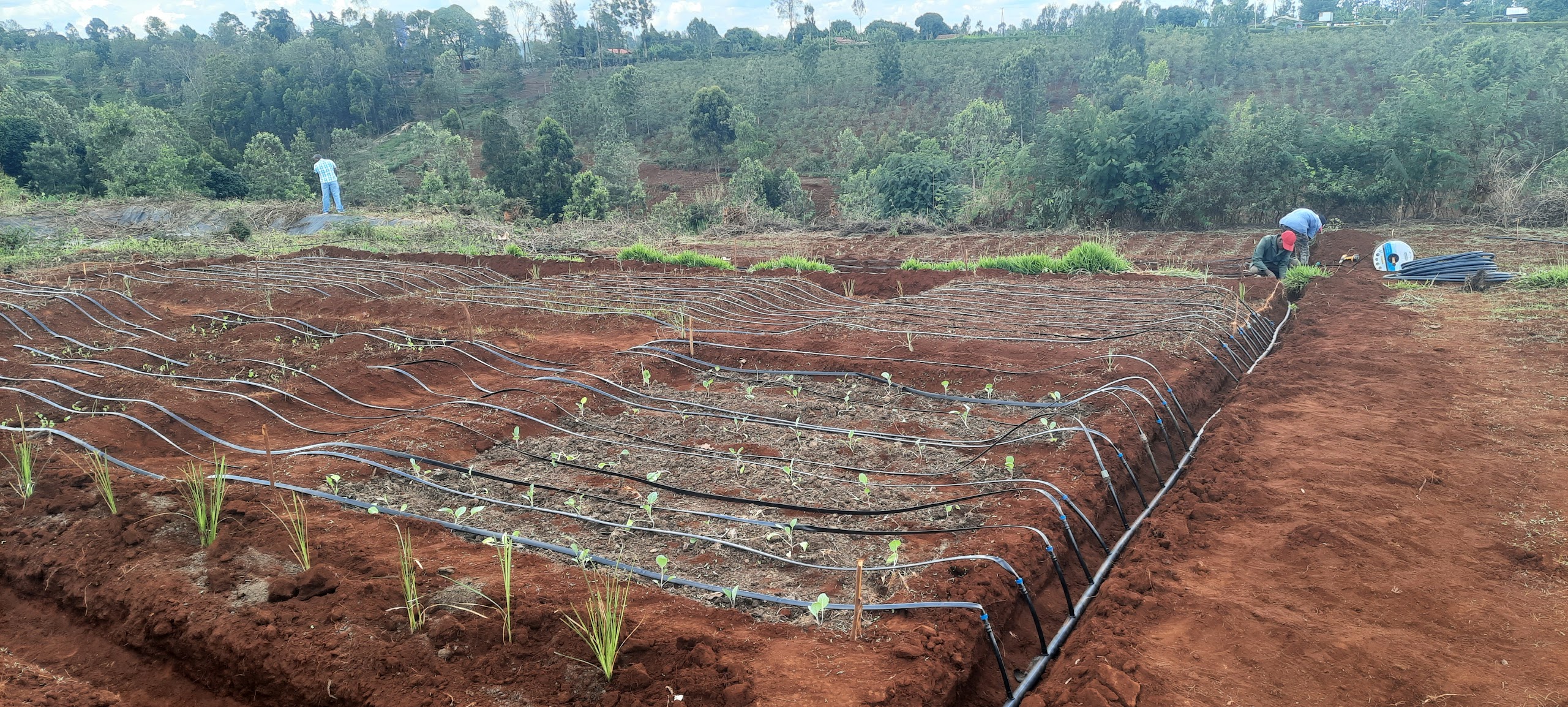
The Vegetable Business Network (VBN) model offers a practical and scalable approach to boosting employment and income for women and youth through sustainable vegetable enterprises. It combines regenerative agriculture, business development, and market linkages to foster entrepreneurship and financial inclusion. Central to the model are community-based business coaches who receive ongoing mentorship and training in agriculture, business skills, leadership, and monitoring and evaluation. Demonstration and learning plots provide hands-on training, while aggregation centres and Participatory Guarantee Systems enhance market access and consumer trust. VBNs are linked to financial services such as village savings and loan associations and credit schemes with input suppliers. Co-investment opportunities enable business growth, and policy engagement addresses barriers like restrictive seed and biopesticide regulations. Sustainability is built through strong leadership, community ownership, and support systems beyond the project’s lifespan. The VBN model ultimately strengthens food security, economic resilience, and agroecological practices, positioning women and youth as key drivers of change. Download Here
The study explored how introducing traditional leafy vegetables into school meals could improve children’s nutrition and create economic opportunities for farmers.
The research, conducted across three Kenyan counties—including one arid area—found that vegetables such as kale, amaranth, African nightshade, and cowpea leaves are locally available and widely preferred. Farmers expressed readiness to produce more if demand from school feeding programs increased.
School meals currently lack essential micronutrients, contributing to poor child health and reduced learning outcomes. Including leafy vegetables could enhance dietary quality, cognitive development, and academic performance, while stimulating local markets and employment.
The study recommends promoting “homegrown school feeding programs” that source vegetables from local networks, improving supply chains and affordability. Fresh vegetables are the most feasible option, though dried vegetables could be used during off-seasons. Overall, integrating vegetables into school meals offers a sustainable pathway to better nutrition, stronger livelihoods, and healthier futures for Kenya’s children. Download Here
The Veggies 4 Planet & People (V4P&P) International Conference, held on May 28–29, 2024, in Nairobi, Kenya, convened stakeholders from across Africa and beyond to reflect on four years of project implementation in Kenya and Ethiopia. Organised by the World Vegetable Center (WorldVeg) and SNV, and funded by the IKEA Foundation, the conference highlighted the project’s achievements in promoting regenerative agriculture, creating employment, and enhancing food systems.
Key Highlights:
- Regenerative Agriculture (RA): The conference emphasised RA practices such as composting, mulching, and integrated pest management (IPM). These methods have improved soil health, reduced reliance on chemical inputs, and increased productivity for smallholder farmers.
- Vegetable Business Networks (VBNs): The project established 219 VBNs, surpassing its initial target. These networks have created over 21,000 jobs, particularly benefiting women and youth, by facilitating roles in seedling production, organic input supply, and marketing.
- Water and Resource Efficiency: Discussions highlighted energy-efficient irrigation methods and water conservation techniques as critical components for sustainable farming, especially in climate-vulnerable regions.
- Policy Advocacy: Murang’a County in Kenya was recognised for its pioneering agroecology policy, serving as a model for integrating RA into local governance frameworks.
- Future Directions: Participants developed recommendations for a potential second phase of the V4P&P project, focusing on scaling successful practices, strengthening policy support, and enhancing community capacities.
The conference underscored the transformative potential of regenerative agriculture in building resilient food systems and empowering communities in Africa.
Download the document Here
The study by Schreinemachers et al. (2018) explores the role of home gardens in improving food security and overall wellbeing in developing countries. Through a comprehensive literature review, the authors highlight that home gardens are traditional, small-scale agricultural systems adjacent to households, cultivating a diverse range of crops and sometimes livestock. These gardens contribute significantly to household food and nutritional security by providing direct access to fresh produce, thus reducing dependency on external food sources.
Beyond nutrition, home gardens offer economic benefits through income generation from surplus produce and contribute to biodiversity conservation by preserving various plant species. They also deliver ecosystem services such as soil fertility enhancement and water conservation. The study emphasises the multifaceted benefits of home gardens, including their social and cultural significance, especially in post-conflict settings like Sri Lanka. However, it notes the need for more empirical research to fully understand their impact and to develop supportive policies and programmes that can enhance their effectiveness in diverse contexts.
Download the document at the following link: https://doi.org/10.17660/ActaHortic.2018.1205.36
This paper describes a case study from Lushoto Dictrict in Tanzania. It starts with an analysis of the problems farmers and other vegetable value chain actors encounter. The problems they identified are related to the capacity to coordinate: among farmers themselves, and between farmers and other stakeholders. To overcome coordination failures that prevent farmers from accessing viable markets, finance or extension services, two vegetable marketing arrangements emerged: the Usambara Lishe Trust and Lushoto Korogwe Vegetables. These arrangements include quality monitoring systems, extension, or joint product delivery based on institutional arrangements that combine features of three governance structures: markets, government, and civil Society. The analytical approach allows for an institutional perspective synthesis of viable mechanisms that directly address common coordination failures impeding integration of smallholder farmers into national, regional and global food chains.
R. Roothaert has been coordinating an Oxfam project in Tanzania that brought wealth to smallholder sisal producers in Kishapu district. This brief describes a ‘Lead- Firm’ Model in which a large sisal processing company, Katani Ltd., was approached to improve smallholder access to markets for sisal. The project set up small-scale processing businesses to extract the fibre from leaves, while Katani committed to purchase all quality fibre. Both the project and Katani funded training for the farmers and processors, while the project arranged credit for processors via Katani to buy machines and for working capital. As a result of the project, more buyers were attracted by the new supply of fibres, farmers and processors gained significant increased income, and the local sisal value chain improved with sustainable connections to high value markets. The Lead-Firm Model provides many advantages, but the selected private-sector actor can monopolise supply and enforce less beneficial conditions of trade. This risk can be avoided by securing more buyers and less exclusive contracts, and providing loans directly to smallholders through an independent agent.
The 2011 study by Muhanji et al. examined how African Indigenous Vegetables (AIVs) can enhance food security and income for smallholder farmers in East Africa. Historically marginalised, AIVs were reintroduced through a project led by FARM-Africa and partners in Kenya and Tanzania, aiming to revitalise their cultivation and market presence.
Key interventions included developing improved AIV varieties such as amaranth, African nightshade, and spider plant, and promoting sustainable farming practices like organic fertilisation and integrated pest management. Farmers were organised into business support units (BSUs), facilitating collective marketing and access to both informal markets and formal retail chains like Uchumi and Tuskys.
The project achieved significant outcomes: AIV demand in Kenya surged by 135% over two years, with sales reaching approximately 9,000 tonnes and generating around Ksh 230 million across various markets. Environmental benefits included reduced chemical usage, while socially, the initiative empowered women and fostered community cohesion through group activities and knowledge sharing.
Overall, the study demonstrated that with strategic support, AIVs could transition from “poor people’s crops” to profitable ventures, contributing to improved nutrition, economic empowerment, and sustainable agriculture in the region.
This study evaluates the impact of introducing improved forage technologies on smallholder farmers in Mindanao, Philippines, and Tuyen Quang, Vietnam. Implemented by the International Center for Tropical Agriculture (CIAT), the project aimed to enhance livestock productivity and farmer livelihoods through the adoption of high-quality forage species.
Key interventions included participatory selection of suitable forage varieties, establishment of demonstration plots, and training programmes for farmers. The adoption of these forages led to significant benefits: increased milk and meat production, reduced labor for feed collection, and improved soil fertility through better land management practices.
Economically, farmers experienced higher incomes due to improved livestock yields and reduced feed costs. Socially, the project fostered community collaboration and knowledge sharing, strengthening local institutions. The study concludes that integrating improved forages into smallholder farming systems can substantially contribute to sustainable agricultural development and poverty alleviation in the region. Download the document here
This book chapter discusses terms and definitions, the history of the Forages for Smallholders Project, and scaling out of forage technologies over two phases of the project. Phase I provided well-suited technical forage options, good technical materials, well-trained local facilitators, and a planting multiplication system adopted by farmers. Phase II resulted in ‘exponential increase of numbers of farmers’ associated with the above and with the addition of farmer cross-visits, facilitation of distribution of seed and planting materials, and key farmer extension workers. Research on complex innovations such as growing of improved feeds, animal nutrition, and monitoring productivity, need the involvement of researchers and users throughout design and implementation. Scaling out to similar target farmers elsewhere would not reduce the complexity, hence participatory approaches in scaling out remain essential.